Journal / Understanding Doneness Temperatures So You Stop Guessing
TechniqueUnderstanding Doneness Temperatures So You Stop Guessing
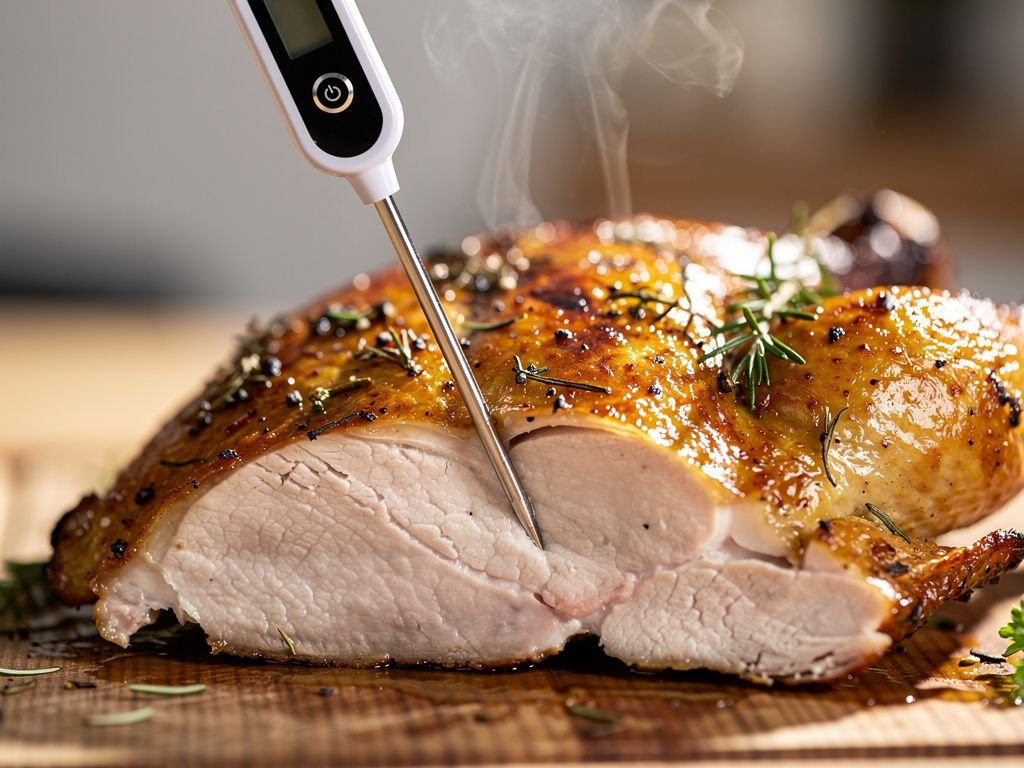
More overcooked chicken and dried-out roasts come from guessing than from any other single mistake in home cooking. The fix is inexpensive and almost foolproof: an instant-read thermometer. Once you start cooking to temperature instead of to time, your results become dramatically more consistent.
Why Time Alone Fails You
Recipe times are estimates based on average conditions -- a specific oven, a specific cut thickness, a specific starting temperature. Your oven may run hot or cool, your chicken breast may be thicker than the recipe writer's, and your meat may have come straight from the fridge instead of resting at room temperature first. Temperature removes all of that guesswork.
Key Numbers to Know
- Poultry (whole and ground): 165 F
- Ground beef, pork, lamb: 160 F
- Beef, pork, lamb steaks and roasts (medium): 140-145 F
- Fish: 145 F, or when it flakes easily
- Reheated leftovers: 165 F
Remember that carryover cooking is real: a large roast can rise another 5 to 10 degrees after it comes out of the oven as residual heat continues to cook the interior. Pull your meat a few degrees before the target and let it rest, tented loosely with foil, for at least 10 minutes.
Insert the thermometer into the thickest part of the meat, avoiding bone, which conducts heat differently than muscle and will give you a false reading. With practice, you will start to develop an intuition for doneness by touch and appearance too -- but the thermometer is what builds that intuition safely in the first place.